
Only Stories in the Building. Turning your content into a mystery worth solving
You don’t need a murder to build mystery, but it helps if something feels hidden.
Some of the most compelling marketing today borrows from Only Murders in the Building. From true crime podcasts. From TikTok rabbit holes and subreddits where users obsess over fictional characters as if they were forensic evidence.
I mean, let’s face it: everyone’s a sleuth now.
We’re not settling for just watching. We’re decoding, cross-referencing, rewinding, and following threads. We’re waiting for the callback and craving the deeper pattern.
This is where content becomes more than a deliverable. It becomes a world. Your audience doesn’t want a 5-step formula. It wants to be let in on the case.
Opening scene: Everyone’s a sleuth now
When Only Murders in the Building debuted, it wasn’t just another whodunit. It was a story about people who love whodunits: people who binge, dissect, speculate, and publish their own versions of events.
It struck a nerve, because we’ve all become little detectives. Podcasts give us clues. Netflix feeds us theories. Instagram shows us the same post six times until we start to notice.
We’re pattern hunters. Meaning seekers. Deep scroll investigators. So why is so much content still so… blah?
When audiences binge OMITB, they connect dots. They don’t just consume. They feel smart for spotting the twist.
They feel involved. Now imagine if your funnel worked like that.
Act I: Mystery is engagement, not murder
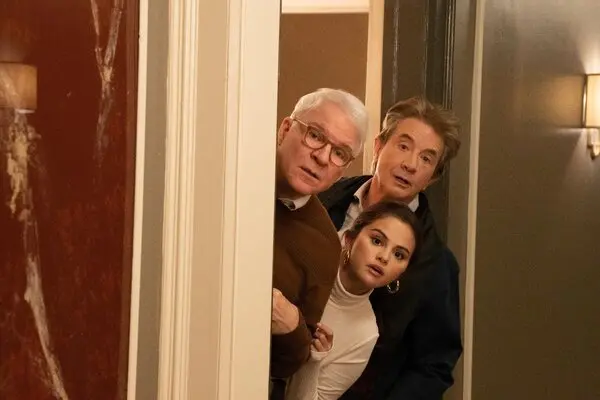
Mystery, at its core, isn’t about crime. It’s about curiosity. It’s the feeling that something’s hidden, but not locked. That somewhere between the headline and the footer, there lives a secret. And if you stick around long enough, you might find it.
This is the narrative magic Only Murders wields so well. Sure, there’s a body. But more than that, there’s humor, emotion, stylized intrigue. The joy of not knowing everything yet.
Which is exactly what most marketing avoids. It hurries to explain. To clarify. To announce. But clarity isn’t always the hook. Sometimes, the best way to keep your audience is to leave something unspoken. A detail that makes them lean in, not scroll past.
The teaser video that doesn’t quite explain.
The blog post that references something you wrote six months ago.
The sales page that rewards the ones who read between the lines.
Mystery isn’t hiding your offer. It’s trusting your reader to find it.
Act II: Layered worlds instead of single stories
Only Murders in the Building is a meta-narrative, a show about people making a podcast about a murder. It stacks stories: past and present, fiction and reality, podcast episodes and real-time sleuthing. What makes it rewatchable is the layered world the audience gets to explore.
Your content can function the same way. A launch doesn’t have to be linear. It can arc like a season finale. A newsletter can carry a reveal that reward long-time readers. A blog post might echo back to something from six months ago, subtly tying threads together for the ones paying close attention.
Think of your marketing ecosystem as a building with secret rooms. Some doors are obvious. Some are hidden behind panels or revealed through strange keys. All of them matter. All of them make the audience feel like this brand knows what it’s doing with story.
Mini case reference: Amos Rex x teamLab: Massless (2025)
In this Helsinki-based exhibition, the art wasn’t something you looked at. It was something that responded to your presence. Movements altered light, patterns evolved, entire environments shimmered and shifted. It wasn’t a passive experience, but a spatial narrative. The visitor became a part of the myth.
Marketing parallel: Build content that behaves. That moves. That responds. Where a reel leads to a blog that leads to a workshop that loops back into a story told long ago or anew.
Don’t just plan campaigns. Architect narrative space.
Act III: Your audience is the detective
No one likes being talked at, but everyone loves being let it. This is what OMITB does best. It makes the audience feel clever. It gives us something to solve. It knows we’re paying attention, and it rewards that attention.
Your marketing can do the same.
Give your readers an unfinished arc. A rhetorical question. A half-told story. Let them follow a trail from post to page to opt-in. Because here’s the thing: curiosity is more powerful than clarity. We don’t click because we’re certain. We click because we want to know.
That desire to understand and to solve the riddle is deeper than FOMO. It’s more durable than urgency. And it’s what makes your audience stick around, even when you’re not posting daily.
Treat your reader like the detective they are. Give them a reason to come back.
Act IV: Build characters, not just content

A good mystery is never just about the plot. It’s about the people, the characters. Charles. Mabel. Oliver. By season five, we don’t just want to know what happened. We want to know how they’re feeling. We want callbacks, inside jokes, quiet reveals. We crave continuity.
Your content needs that too. Not just tips and takeaways, but voice.
Maybe your founder is the eccentric narrator. Maybe your brand has a motif, like an opening line that always changes but always returns. Maybe you invent a fictional persona who guides the reader.
(Yes, Moomin.com has done this. With remarkable grace. Even e-commerce can carry soft mystery.)
People don’t binge data. They binge character.
Act V: Don’t just deliver content. Create a case
You could plan your next quarter using a calendar. Or you could build a caseboard. Not of dates, but of details. Content that connects. Emails that echo. A launch sequence with lore.
Each blog post becomes a clue. Each call-to-action, a breadcrumb. Each “just checking in” message, a callback to something your audience now recognizes.
That’s how you turn readers into returners. You stop announcing and start unfolding.
Closing line
The best marketing doesn’t shout but whispers. It hands you a flashlight and says, “Look again”. So try this: next time you publish something, don’t ask if they got it. Ask instead: “What clue did I leave behind?”
Let them find it. Let them feel it. After all, mystery doesn’t chase your audience. It calls them closer. And in that quiet moment of discovery they remember you. Not as a brand, but as the one who trusted them with the secret.
Only Murders in the Building image copyright: Disney+